
skip to main |
skip to sidebar

EPIPHANIES AND EPIPHENOMENA---- The Spread of Excellence Through Mutation, Time and Circumstance

Mutation as Metaphor:
Mutation takes different forms...some mutations occur as accidents or physical insults to an individual during its lifetime and are neither inherited nor inheritable. Other forms of damage happen to the genes of a cell...which can replicate within the individual but which are still not in the germ line----not on the inheritable DNA. And then there is the mutation which triggers an alteration in descendents.
------------Jacquelyn McBain
For all the mutations that occur, most are harmless as they happen to those strands of molecules that do nothing, junk DNA. Harmful mutations kill or weaken. But every once in a very long while, a mutation comes along that gives us an edge, a survivalist advantage and it is that kind of mutation, the kinds of which occur rarely, over vast expanses of nearly imcomprehensible time that survive and proliferate so that we read their occurrence not only as beneficit but expected.
Mutation takes different forms...some mutations occur as accidents or physical insults to an individual during its lifetime and are neither inherited nor inheritable. Other forms of damage happen to the genes of a cell...which can replicate within the individual but which are still not in the germ line----not on the inheritable DNA. And then there is the mutation which triggers an alteration in descendents.
------------Jacquelyn McBain
For all the mutations that occur, most are harmless as they happen to those strands of molecules that do nothing, junk DNA. Harmful mutations kill or weaken. But every once in a very long while, a mutation comes along that gives us an edge, a survivalist advantage and it is that kind of mutation, the kinds of which occur rarely, over vast expanses of nearly imcomprehensible time that survive and proliferate so that we read their occurrence not only as beneficit but expected.
Although scientists are as subject as all people to the mixture of awe, horror, and curiousity that draws people to sideshows, teratology has an important rationale beyond primal fascination.
The laws of normal growth are best formulated and understood when the causes of their exceptions can be established. The experimental method itself, a touchstone of scientific procedure, rests upon the notion that induced and controlled departures from the ordinary can lay bare the laws of order. Congenitally malformed bodies are nature's experiments, uncontrolled by intentional human art to be sure, but sources of insight, nonetheless.
The early teratologists sought to understand malformations by classifying them. In decades before Darwin, French medical anatomists developed three categories: missing parts (monstres par defaut), extra parts (monstres par exces), and normal parts in the wrong places. ----Stephen Jay Gould
The laws of normal growth are best formulated and understood when the causes of their exceptions can be established. The experimental method itself, a touchstone of scientific procedure, rests upon the notion that induced and controlled departures from the ordinary can lay bare the laws of order. Congenitally malformed bodies are nature's experiments, uncontrolled by intentional human art to be sure, but sources of insight, nonetheless.
The early teratologists sought to understand malformations by classifying them. In decades before Darwin, French medical anatomists developed three categories: missing parts (monstres par defaut), extra parts (monstres par exces), and normal parts in the wrong places. ----Stephen Jay Gould
About Me

Helpful Monsters
......One of he cruelest and most fascinating specatcles of decades now thankfully past----the rows of malformed people forced (by an absence of other opportunities) to desplay themselves to a gawking public at the Ringling Brothers' sideshow.
The genteel and legitimate conterpart to such public cruelty is the vast scientific literature on deformed births---- (Gould)
......One of he cruelest and most fascinating specatcles of decades now thankfully past----the rows of malformed people forced (by an absence of other opportunities) to desplay themselves to a gawking public at the Ringling Brothers' sideshow.
The genteel and legitimate conterpart to such public cruelty is the vast scientific literature on deformed births---- (Gould)
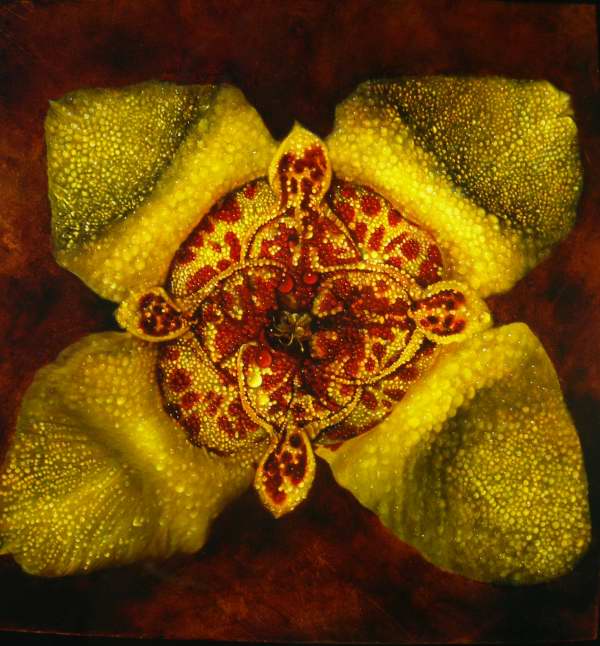
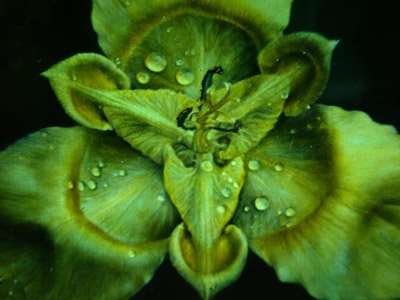
Saint Andrew's Cross
Saint Godberta Indicating the Biohazard Symbol (detail)
Saint Andrew's Cross (detail)
No comments:
Post a Comment